


Why Neonatal Kittens Are the Most Vulnerable Animals in Shelters

Every year, animal shelters do everything they can to save lives with limited space, staff, and resources. For many animals, a safe kennel, food, and basic medical care are enough to bridge the gap until adoption.
But neonatal kittens are different.
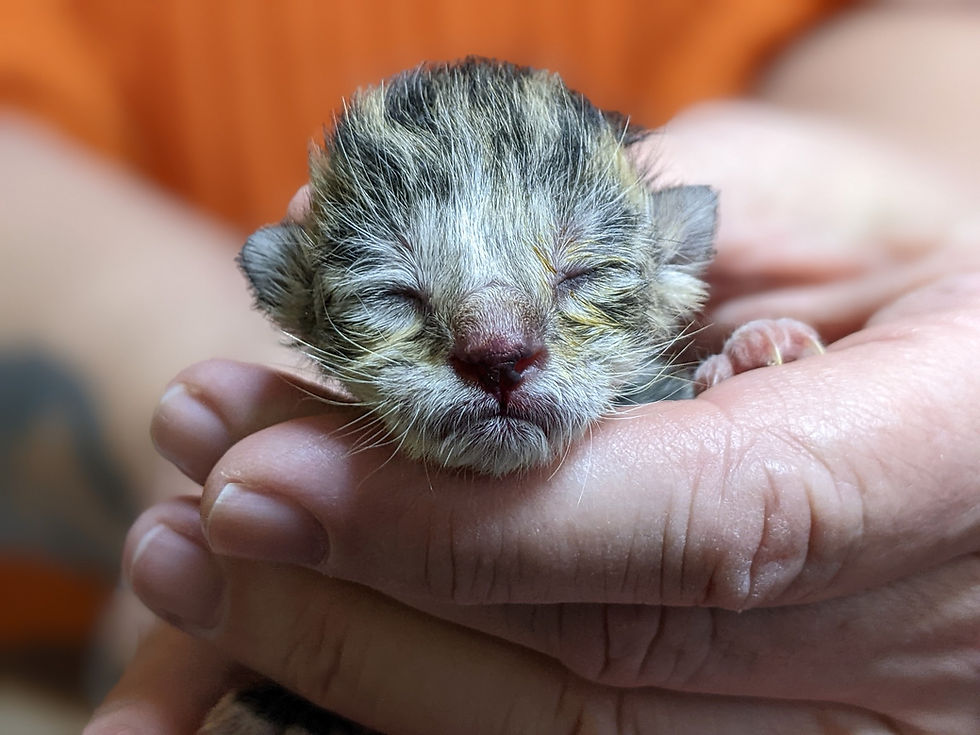
Kittens under five weeks old are the most vulnerable animals to enter a shelter system — and often the least equipped to survive there without immediate, specialized intervention. Understanding why helps explain both the heartbreaking statistics around neonatal kitten survival and why rescue partnerships are so critical.
They Cannot Regulate Their Own Bodies
Newborn kittens are born completely dependent on others for survival. They cannot regulate their body temperature, blood sugar, or hydration. Even short periods of cold exposure can be fatal, and a kitten that is chilled cannot safely digest food.
In a shelter environment — where intake is constant and emergencies are frequent — it can be difficult to provide the uninterrupted warmth and monitoring neonates require. Without incubators, heating protocols, and trained staff watching for subtle changes, kittens can decline rapidly and quietly.
📌 Here are the warming tools we use in our foster homes:
They Need Round-the-Clock Care
Neonatal kittens don’t eat once or twice a day. They eat every two to four hours, including overnight. They need help eliminating waste. They must be weighed daily — sometimes multiple times a day — to ensure they’re gaining grams, not losing them.
📌 Here's the scale we love for neonates:
This level of care is closer to a neonatal ICU than standard sheltering. Most shelters simply are not staffed or structured to provide 24/7 feeding schedules, medical monitoring, and individualized care for each tiny life.
They Decline Fast—and Often Without Warning
Adult animals often show clear signs when something is wrong. Neonatal kittens don’t always get that chance.
A kitten can appear stable at one feeding and be in crisis by the next. Low blood sugar, dehydration, aspiration, infection, or congenital defects can escalate in hours. Without someone trained to spot subtle warning signs — and able to intervene immediately — many kittens are lost before help arrives.
This isn’t because shelters don’t care. It’s because neonates require a level of vigilance that most systems were never designed to provide.
They Are Especially Vulnerable to Disease
Neonatal kittens have immature immune systems. They rely heavily on maternal antibodies, which orphaned kittens often never receive. In a shelter setting where many animals pass through shared spaces, the risk of exposure to viruses and bacteria is high.
Even common pathogens can be deadly to a kitten only days or weeks old. Strict sanitation, isolation, and medical protocols are essential — but difficult to maintain in busy, high-volume environments.
They Need Foster Homes—Not Kennels
Neonatal kittens don’t belong in kennels. They need quiet, stable environments where temperature, feeding, and handling can be carefully controlled. Foster homes provide what shelters often cannot: individualized attention, flexibility, and constant observation.
This is why foster networks — and rescues that specialize in neonatal care — are essential to saving these lives. When shelters can transfer neonatal kittens quickly to trained foster homes with proper support, survival rates improve dramatically.
Why Rescue Partnerships Matter
Shelters save lives in countless ways every day. But neonatal kittens require a different model — one built around specialized training, medical oversight, and community-based foster care.
Rescue partnerships allow shelters to say yes instead of no. They create a safety net for the tiniest animals, ensuring that lack of resources doesn’t mean lack of compassion or opportunity.
When shelters and neonatal-focused rescues work together, kittens who would otherwise be lost get the chance to grow, thrive, and eventually go home.
The Bottom Line
Neonatal kittens aren’t fragile because they’re weak—they’re fragile because they’re brand new. With the right care, education, and support, many of these kittens can and do survive.
Saving them requires understanding their needs, respecting their vulnerability, and building systems that meet them where they are.
Because every life — no matter how small — deserves a fighting chance.


Comments