


Where Do Orphaned Kittens Come From?
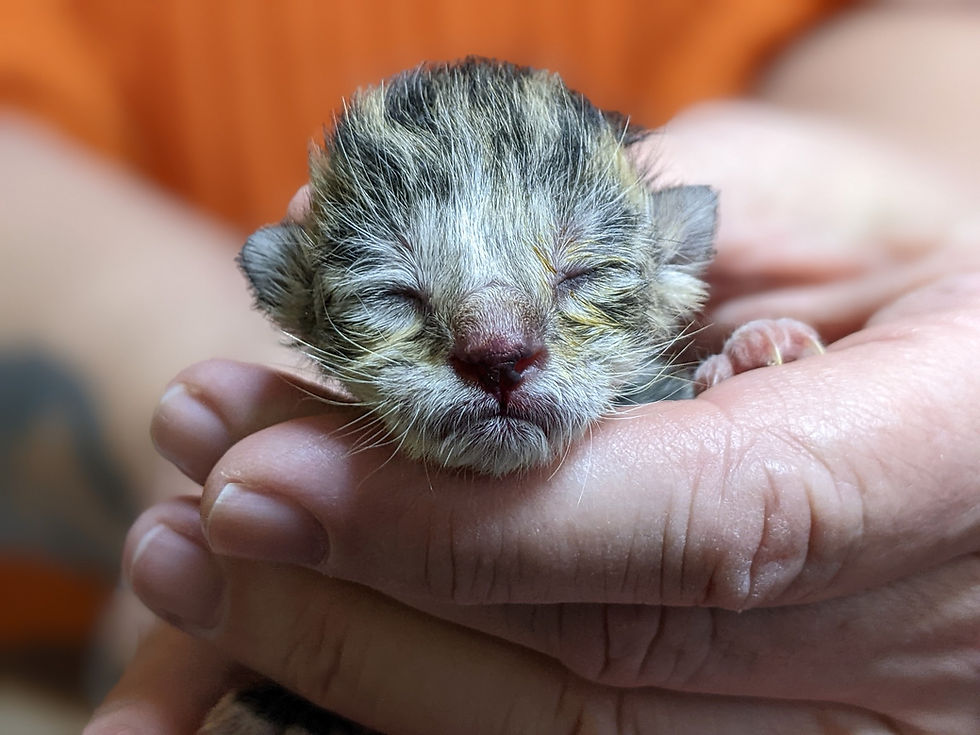
Every spring and summer, animal shelters and rescues are flooded with tiny, vulnerable kittens.
Many people assume these kittens were abandoned by their mothers.
The reality is a little more complicated.
Understanding where orphaned kittens come from is one of the most important things you can learn if you want to help save them.
Most Orphaned Kittens Are Born to Community Cats
The vast majority of newborn kittens entering shelters each year are born to community cats.
Community cats are free-roaming cats that live outdoors rather than in traditional homes. Some are completely unsocialized and avoid people, while others may be friendly because they were once owned or are cared for by neighborhood residents.
When they aren't spayed or neutered they continue having litter after litter, and many of those kittens eventually enter the shelter system.
Community Cats Aren't the Problem
It's important to remember that community cats themselves aren't the problem.
Healthy community cats are often well adapted to living outdoors and can thrive in their environment.
The real challenge is unchecked reproduction.
A female cat can become pregnant again just weeks after giving birth and may have two or three litters every year if she isn't spayed. Because her kittens can begin reproducing at just a few months of age, populations grow incredibly quickly.
That's why Trap-Neuter-Return (TNR) programs are so important.
TNR involves humanely trapping community cats, having them spayed or neutered and vaccinated, and then returning them to the outdoor areas they already call home.
This approach prevents future litters, improves the health of the cats, and dramatically reduces the number of kittens entering shelters over time.
Every cat that's spayed today helps prevent countless kittens from being born into an already overwhelmed system.
What About Pet Cats?
Occasionally, orphaned kittens are born to owned cats.
This can happen if an unspayed pet becomes pregnant and something prevents her from caring for her kittens. For example, she may:
Become ill or injured
Pass away after giving birth
Not produce enough milk
Reject the litter
Be too young or inexperienced to care for them
These situations happen, but they're much less common than many people think.
In our years of caring for thousands of neonatal kittens, only a very small number have come from owned cats. Nearly every orphaned newborn we've helped was born to a community cat.
Mother Cats Usually Choose Hidden Places to Give Birth
When it's time to have her kittens, a mother cat looks for somewhere quiet, protected, and out of sight.
She might choose places like:
Under a porch
Inside a shed or garage
Beneath a deck
In a crawl space
Under dense bushes
Inside a woodpile
In an abandoned building
These locations feel safe from predators and the elements.
Unfortunately, they're also places people frequently discover while gardening, doing yard work, cleaning out storage spaces, or walking their dogs.
The Most Common Way Kittens Become Orphaned Might Surprise You
Here's something many people don't realize: Some kittens become orphaned because someone accidentally rescues them.
Imagine you're mowing the lawn or pulling weeds and discover a nest of tiny kittens. They're alone. They're crying. You don't see a mother cat anywhere.
Out of kindness, you scoop them up and rush them to the nearest shelter.
But in many cases, their mother wasn't gone at all. She was simply out looking for food.
Mother cats cannot stay with their kittens 24 hours a day. They have to leave periodically to eat, drink, and care for themselves before returning to nurse and protect their babies.
When well-meaning people remove healthy kittens during one of these normal absences, they unintentionally separate a family. Those kittens, who had an attentive mother just moments before, now truly are orphans.
Mom Is Almost Always Their Best Chance
For unweaned kittens, there is no substitute for a healthy mother cat.
She provides:
Perfectly balanced nutrition
Warmth
Protection
Grooming
Help with urination and defecation
Social development
Around-the-clock care
Even the most experienced foster caregiver can't fully replace everything a mother cat naturally provides.
That's why, whenever it's safe to do so, the best place for newborn kittens is with their mother.
Don't Assume They're Orphaned
Finding kittens alone does not automatically mean they need to be rescued.
In many cases, the kindest thing you can do is observe from a distance and give their mother an opportunity to return.
Of course, there are situations where kittens truly are orphaned or in immediate danger and need human intervention. Learning how to recognize those situations is critical, because acting too quickly—or waiting too long—can both have serious consequences.
If you're unsure what to do after finding newborn kittens, reach out to a local rescue organization before moving them. A quick conversation can help determine the safest course of action for both the kittens and their mother.
The goal isn't simply to rescue kittens whenever we find them. The goal is to make sure every kitten gets the best possible chance to survive—and most of the time, that chance begins with staying with their mom.


Comments